
The Science Behind Car Tinting
Introduction: How Car Tinting Actually Works
Car tinting isn’t just about aesthetics. It’s a layer of science applied to glass—built to manage light, heat, and radiation. In simple terms, automotive window tinting works by absorbing, reflecting, and filtering parts of the sunlight spectrum.
The tint film contains nanoparticles of ceramic, carbon, or metallic compounds that block heat-producing infrared (IR) rays and harmful ultraviolet (UV) radiation while allowing visible light to pass through. This balance between transparency and protection is what keeps your car cooler, protects the interior, and improves driving comfort.
If you’ve ever wondered why tinted glass feels cooler even when the sun is blazing, the answer lies in how these films interact with solar energy at the molecular level.
Understanding the Basics of Automotive Window Tinting
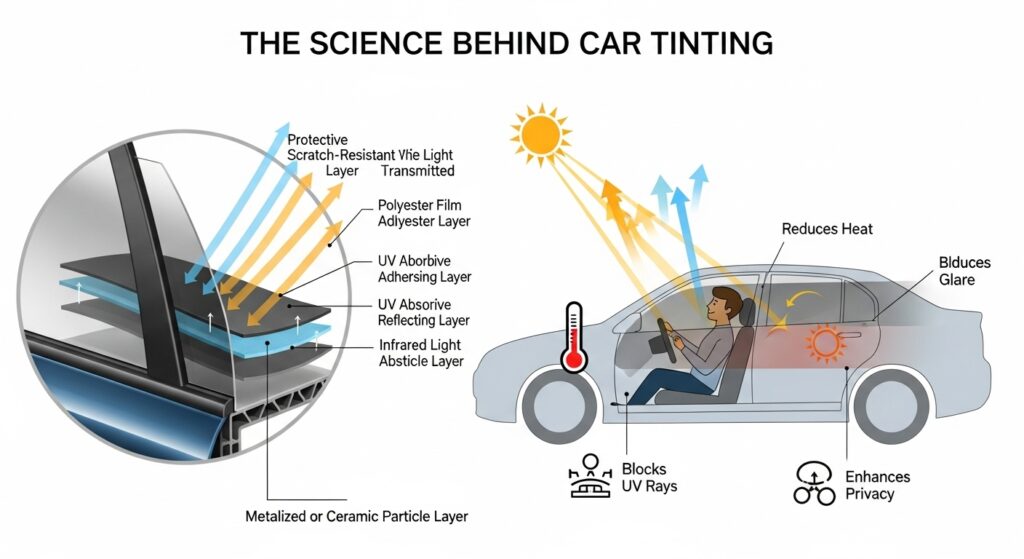
A window film is a thin, multi-layered sheet bonded to the inside of automotive glass. It’s typically made of polyester, ceramic, or carbon composites with adhesives, UV blockers, and anti-scratch coatings.
Each layer serves a function:
- The adhesive layer ensures bubble-free bonding.
- The UV-absorption layer protects interiors from sun damage.
- The IR-reflective layer reduces heat transfer.
- The top coat improves clarity and scratch resistance.
This combination turns ordinary glass into a smart barrier that manages light, heat, and energy flow — without sacrificing visibility.
The Physics Behind Heat Rejection and UV Protection
Infrared Radiation Blocking
Infrared rays (700–2500 nm) are responsible for most of the heat you feel inside a car.
High-quality tints use nanoceramic and non-metallic films to block up to 95% of IR energy. These microscopic ceramic particles act as mirrors on a molecular level — reflecting and scattering heat-producing wavelengths back into the atmosphere.
The result? Lower interior temperatures, reduced load on air conditioning, and improved energy efficiency.
UV Absorption and Reflection
Ultraviolet radiation (100–400 nm) is invisible but highly damaging. Modern tints incorporate UV-absorbing dyes and inhibitors that block up to 99% of harmful rays.
This prevents:
- Fading and cracking of upholstery and dashboards.
- Skin damage caused by long-term UV exposure.
- Discoloration of plastic and leather components.
By combining UV absorption and IR reflection, tint films create a powerful solar shield that protects both passengers and materials.
Visible Light and Glare Reduction
Glare from sunlight or oncoming headlights can cause eye strain and distraction.
Window tints manage visible light transmission (VLT) — the amount of light passing through the film — by scattering excess brightness. This results in softer illumination, clearer vision, and safer driving at all times of day.
Types of Window Films and How They Differ
Different tint films use distinct materials and structures to achieve specific outcomes.
Ceramic and Nano-Ceramic Films
Ceramic tints are considered the gold standard in modern tinting technology. They use non-metallic ceramic nanoparticles that block both infrared heat and UV radiation without affecting visibility or interfering with electronics.
Nano-ceramic window films improve on this technology by incorporating ultra-fine particles that enhance clarity, color stability, and durability.
Key benefits:
- Exceptional heat rejection
- Signal-friendly (no interference with GPS or mobile)
- High optical clarity
- Scratch resistance
Carbon and Hybrid Films
Carbon window films use carbon pigments to absorb solar energy effectively while maintaining a matte, non-reflective finish.
They are durable, fade-resistant, and ideal for achieving a premium look without a metallic shine.
Hybrid tints combine metallic and dyed layers, balancing performance and affordability. They reflect heat efficiently but may slightly affect signal transmission.
Metallic and Sputter Films
Sputter films are produced by embedding metal particles (like aluminum, nickel, or titanium) into the film using a process called sputter deposition.
They provide strong heat rejection and high reflectivity, giving windows a mirrored appearance often used in commercial window film installations.
These films reflect both infrared and visible light, creating a cooler cabin environment and enhancing privacy.
Residential Mirror-Effect and Commercial Films
Beyond vehicles, mirror-effect window films and architectural tints are widely used in offices and homes.
They combine energy-saving properties with privacy by reflecting external light during the day while maintaining interior visibility.
High-end products, such as 3M Fasara Window Film, 3M Di-Noc Film, and 3M Safety and Security Films, are examples of films that integrate design, performance, and safety in both residential and commercial environments.
The Role of Nanotechnology in Modern Tint Films
Nanotechnology is what truly separates new-age tints from older films.
By manipulating particles at the nanometer scale, engineers can control how the film interacts with light waves.
How it works:
- Nano-ceramic particles selectively reflect infrared radiation while allowing visible light to pass.
- Surface coatings resist oxidation, corrosion, and discoloration.
- Molecular alignment improves optical uniformity, reducing haze and distortion.
This level of precision creates window films that are thinner, clearer, and more efficient, offering high solar energy rejection without darkening the glass excessively.
Key Benefits of Advanced Tinting Solutions
- Thermal Comfort – Keeps interiors cooler by reflecting heat and reducing solar load.
- UV Protection – Blocks up to 99% of harmful rays, preserving both skin and surfaces.
- Energy Efficiency – Reduces air-conditioning use, saving energy and fuel.
- Safety Enhancement – Holds shattered glass together in case of impact.
- Privacy and Aesthetics – Adds style while protecting valuables from prying eyes.
- Glare Control – Improves visibility for safer, more comfortable driving.
When paired with ceramic or sputtered technologies, these films offer long-lasting clarity and superior environmental resistance.
Choosing the Right Tint for Your Climate and Needs
Hot Climates
In regions with extreme heat, choose nano-ceramic or sputter films for maximum infrared and UV rejection.
Humid or Coastal Areas
Select films with anti-corrosion coatings and non-metallic compositions to prevent oxidation.
Urban Environments
For privacy and energy savings, mirror-effect window films or architectural tints help maintain comfortable interiors while reducing glare from city lights.
Tip: Always check the visible light transmission (VLT%) and local tint regulations before installation. A professional installer can balance visibility and performance based on your region’s sunlight intensity.
Installation Process: How Professional Tinting Is Applied
Step 1: Cleaning and Preparation
Glass surfaces are cleaned thoroughly to remove dust, oils, and residues.
Step 2: Measuring and Cutting
Films are precision-cut to match the exact shape of each window using computer-guided templates.
Step 3: Application
An adhesive layer is activated with a mild solution, allowing the film to bond evenly to the glass surface.
Step 4: Heat-Shrinking
A heat gun shapes the film to curved surfaces, ensuring smooth, bubble-free adhesion.
Step 5: Drying and Curing
After installation, the film requires several days to cure fully — this process allows the adhesive to harden and achieve optical clarity.
To tint a car window professionally, clean the glass, measure and cut the film precisely, apply it using an adhesive solution, heat-shrink to fit, and let it cure for 3–5 days.
Maintenance, Longevity, and Tint Performance
Proper care extends the life of your tint significantly.
- Cleaning: Use a soft microfiber cloth and ammonia-free cleaner.
- Curing Time: Avoid rolling down windows for at least 3–5 days post-installation.
- Inspection: Check for edge lifting or bubbling annually.
- Re-tinting: Quality tints last 8–10 years, depending on exposure and maintenance.
Premium nano-ceramic films maintain color stability and clarity over time, unlike dyed films that fade under prolonged UV exposure.
FAQs – People Also Ask
1. What is the science behind car tinting?
Car tinting uses multi-layer window films engineered to absorb, reflect, and scatter light. By blocking infrared and ultraviolet radiation, they keep the cabin cooler and protect occupants from harmful rays.2. Does window tint reduce interior heat?
Yes. Infrared-blocking films reduce heat gain by up to 60–70%, lowering cabin temperatures and air-conditioning demand.3. How does ceramic tint differ from metallic tint?
Ceramic tints use non-conductive nanoparticles to block heat and UV rays without signal interference. Metallic tints rely on reflective metal layers that may disrupt GPS or radio signals.4. Can tinting affect night visibility?
Quality ceramic and carbon tints maintain high visibility at night while minimizing glare from headlights.5. What is the lifespan of window tint?
Premium films can last 8–10 years with proper care. Factors like climate, sunlight exposure, and maintenance affect durability.6. Are there energy-saving benefits?
Yes. Reducing heat ingress lessens air-conditioning load, translating to lower energy consumption and improved fuel efficiency.7. Is car tinting legal everywhere?
Regulations vary by country and region. Always verify local VLT limits before installation.Conclusion: The Science of Comfort, Protection, and Clarity
Car tinting represents a perfect blend of material science, nanotechnology, and practical design. By understanding how window films manage heat, light, and UV radiation, it becomes clear that tinting is not a luxury—it’s a performance upgrade. Whether for cars, homes, or offices, advanced films—like ceramic, carbon, or mirror-effect coatings—enhance comfort, protect interiors, and contribute to energy efficiency. In hot climates, a well-chosen tint can reduce cabin temperatures dramatically while extending the life of your interior surfaces. With ongoing advances in nano-ceramic and smart-film technologies, the science behind car tinting continues to evolve, offering greater transparency, safety, and sustainability.