
The Role of Window Tinting in UV Protection
Introduction
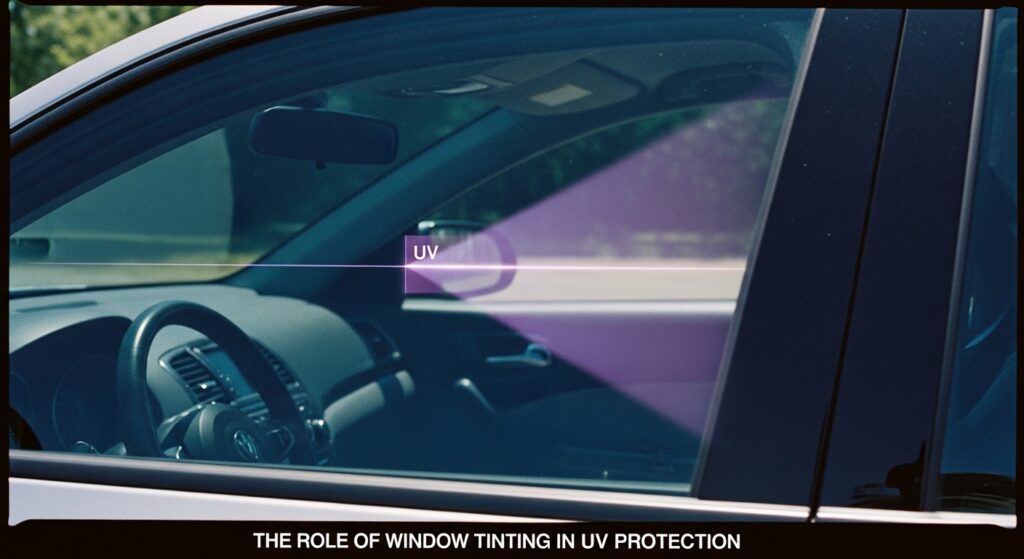
In Dubai’s intense desert climate, sunlight isn’t just bright—it’s relentless. Prolonged exposure to ultraviolet (UV) radiation can damage your skin, fade your car’s interior, and increase cabin heat. Window tinting offers more than style; it acts as a protective barrier against harmful UV rays, glare, and excess heat. Understanding the science behind UV protection in automotive window tinting helps car owners make informed decisions that balance comfort, compliance, and safety.
Understanding UV Radiation and Its Effects
Ultraviolet (UV) rays are part of the sun’s light spectrum, divided into UVA, UVB, and UVC.
- UVA rays penetrate deep into the skin and cause premature aging.
- UVB rays are stronger and contribute to sunburn and skin cancer.
- UVC rarely reaches the Earth’s surface but is the most harmful.
In Dubai, where sunlight intensity is extreme year-round, even short-term UV exposure during daily driving can cause cumulative damage. The car’s windows allow a portion of UVA rays to pass through, which can harm your skin and eyes.
Impact on Your Vehicle
- Fading upholstery and dashboards due to UV-induced material degradation.
- Cracked leather and discolored plastics caused by prolonged radiation exposure.
- Increased cabin temperature, which adds strain on air conditioning systems and fuel efficiency.
How Window Tinting Provides UV Protection
Automotive window tinting uses multilayered films engineered to filter light selectively. These films incorporate UV-blocking compounds, dyes, metals, or ceramic nanoparticles to block up to 99% of harmful UV radiation.
The Science Behind Tinting Films
- UV-absorbing compounds neutralize harmful rays and convert energy into harmless heat.
- Metallic and hybrid tints reflect light, reducing glare and heat absorption.
- Ceramic technology enhances clarity and durability while maintaining signal transparency.
The key is selective wavelength filtration — allowing visible light while blocking UV and infrared radiation. This ensures better visibility, safety, and comfort.
Types of Window Tinting Films Used in Dubai
In Dubai, drivers and businesses can choose from a variety of tinting films, each offering distinct benefits and UV protection levels.
1. Ceramic Window Tint
Made with non-conductive ceramic particles, ceramic window tint offers exceptional UV rejection, up to 99%, while maintaining visibility and comfort. It’s ideal for Dubai’s climate due to heat rejection and longevity.
2. Metallic Tint Film
This film reflects UV and infrared rays using metallic particles. While effective for heat control, it may interfere with GPS or mobile signals. It’s often chosen for commercial window film applications.
3. Dyed Film
An economical option providing aesthetic value and moderate UV protection. It’s suitable for residential mirror effect window film solutions where privacy and appearance matter more than maximum performance.
4. Hybrid and Nano Films
Hybrid films combine metal and dye, while nano-ceramic and infrared rejection films enhance UV filtration, glare reduction, and energy efficiency.
Health and Safety Benefits of UV-Resistant Tinting
UV-protective window films safeguard both the driver and passengers from sun exposure. In Dubai, where people spend long hours commuting, this protection is essential.
Skin Protection
Tinted windows reduce UV-induced skin damage and lower the risk of conditions like melanoma and photoaging. They create an invisible barrier, minimizing cumulative UV absorption even through glass.
Eye Protection
Reduced glare prevents eye strain and improves driving focus, particularly under Dubai’s intense midday sun.
Safety in Emergencies
High-quality tints, such as 3M Safety and Security Film, reinforce glass structure, preventing shattering in case of accidents or impact. This adds a layer of passive protection beyond UV defense.
Protecting Vehicle Interiors from Sun Damage
Your car’s interior materials—dashboard, leather seats, and trim—are vulnerable to Dubai’s extreme solar exposure. UV rays break down molecular bonds, leading to discoloration and brittleness.
Benefits of Interior Preservation
- Prevents fading and cracking of upholstery.
- Extends lifespan of materials and electronics.
- Maintains resale value by preserving interior quality.
Modern films like 3M Di-Noc Film are not only durable but also aesthetically appealing, combining heat rejection with UV protection to preserve luxury car interiors.
Heat Reduction and Energy Efficiency
Window tinting is not just about blocking UV rays — it’s also a climate control solution. By filtering infrared radiation, tinting reduces cabin temperature by several degrees.
The Cooling Effect
Lower interior temperatures mean your air conditioning doesn’t work as hard, leading to:
- Reduced fuel consumption
- Improved energy efficiency
- Sustainable environmental impact
This benefit aligns with Dubai’s growing focus on eco-conscious driving and smart mobility.
Choosing the Right Tint: Ceramic, Metallic, or Dyed
Selecting a tint depends on your priorities — UV protection, heat control, style, or budget.
| Type | UV Rejection | Heat Reduction | Durability | Ideal Use |
|---|---|---|---|---|
| Ceramic | 99% | High | Excellent | Premium cars, hot climates |
| Metallic | 90% | Very High | High | Commercial use |
| Dyed | 70% | Moderate | Medium | Budget or residential |
| Hybrid | 95% | High | Excellent | Mixed needs |
Always ensure professional installation for maximum effectiveness and film longevity.
Dubai’s Legal Window Tinting Regulations
Dubai enforces specific tinting laws to maintain road safety and visibility.
- Maximum legal tint darkness: 50% for side and rear windows.
- Front windshield: Tinting not permitted unless exempted for medical or safety reasons.
- Film certification: Must meet UAE standards and not hinder driver visibility.
Professional tinting providers ensure compliance while offering optimal UV-resistant car window tinting in Dubai solutions that blend safety, comfort, and style.
UV Protection Beyond Cars: Residential & Commercial Applications
While automotive tinting is popular, UV protection extends beyond vehicles.
Residential Window Films
- Reduce heat entry and cooling costs.
- Protect furniture, flooring, and artwork from fading.
- Enhance privacy through mirror effect window films.
Commercial Window Films
- Improve energy efficiency in office towers.
- Create glare-free environments for productivity.
- Offer a polished, professional façade while maintaining thermal control.
Products like 3M Fasara Window Film blend function and aesthetics, making them popular for Dubai’s modern architecture.
FAQs: What People Also Ask About Window Tinting in Dubai
1. How much UV protection does window tint provide?
High-quality ceramic window films block up to 99% of UV rays, reducing both heat and skin exposure.
2. Is window tinting legal in Dubai?
Yes. The UAE allows up to 50% window tinting on most car windows, but always verify regulations with the RTA (Roads and Transport Authority) before installation.
3. Does tinting make a car cooler?
Yes. By filtering infrared radiation, tinting lowers cabin temperatures and decreases air conditioning use, improving fuel economy.
4. What’s the best tint for Dubai’s heat?
Ceramic window tint is ideal — it offers superior UV and heat rejection, clarity, and long-term durability suited to Dubai’s climate.
5. Can tinting films protect interiors from fading?
Absolutely. Tints shield against UV damage, preserving upholstery, dashboards, and interior surfaces for years.
Conclusion
In Dubai’s year-round sun and heat, UV protection through window tinting is not a luxury—it’s a necessity. The right automotive window tinting safeguards your skin, protects your car’s interior, and enhances energy efficiency.
Advanced materials such as ceramic and safety films combine science, comfort, and compliance to deliver maximum protection. Whether for your car, home, or office, UV-resistant tinting solutions in Dubai help you stay cool, safe, and stylish—while preserving your investment for the long run.
Choose smart, stay protected, and drive confidently under the Dubai sun.