

3M FX-ST 50 Car Tint in Dubai
Lighter FX-ST shade for higher visible-light transmission, UV protection and reduced glare.
Quick answers
FX-ST 50 in Four Numbers
The published figures for FX-ST 50, and what each one means for your car.
Visible light
45–54%
45 percent on factory-tinted Auto 75 glass, 54 percent on 6 mm clear glass.
UV blocked
99%
Protects skin and slows fading of the interior.
Glare cut
40%
A subtle reduction in glare with a light tinted look.
Legal on a private car?
Depends
On clear glass it can pass 50 percent; on tinted factory glass it may not. It is measured.
3M FX Standard Series data on Auto 75 factory-tinted glass. Full figures, including 6 mm clear glass, are on this page.
3M FX-ST 50 is the lightest named shade page in Car Cool’s FX-ST series. It allows more visible light through than FX-ST 35, 20 or 5, so its main advantage is a lighter appearance and stronger outward visibility while retaining the UV and solar-control characteristics of the series.
FX-ST 50 should still be selected according to the vehicle, glass position and current local requirements. If you want more privacy, compare FX-ST 35, FX-ST 20 or FX-ST 5. For better heat performance at a lighter appearance, compare Ceramic IR and Crystalline.
FX-ST 50: Light Transmission and Non-Metallized Construction
FX-ST 50 uses the same non-metallized dyed-polyester construction as the rest of the FX-ST family. That construction is designed to avoid the radio-frequency interference associated with some metallic window films.
This lighter shade allows more daylight and clearer outward visibility, with less privacy than darker FX-ST shades. Signal compatibility, UV rejection and solar control are series characteristics, while visible-light behaviour changes by shade.
FX-ST 50 Performance and Shade Characteristics
3M reference data on Auto 75 glass: FX-ST 50 is listed at 45% VLT, 99% UV blocking, 50% TSER, 40% glare reduction, 7% IRR and 53% IRER.
3M reference data on 6 mm clear glass: FX-ST 50 is listed at 54% VLT, 99% UV blocking, 31% TSER, 39% glare reduction, 7% IRR and 23% IRER.
Shade position: FX-ST 50 is the lighter end of this Car Cool shade group, so it preserves more daylight and outward visibility than FX-ST 35, 20 or 5. It provides less privacy and less glare reduction than the darker options.
The different TSER values reflect different 3M reference-glass systems. Use the figures as comparison data, then confirm the final shade and glass position before installation. Compare FX-ST 35 for more privacy or return to the FX-ST range.
Appearance, reflectivity and signal behaviour
3M FX-ST 50 is the lightest FX-ST shade. On Auto 75 factory-tinted glass 3M lists it at 45 percent visible light, 50 percent total solar energy rejected, 40 percent glare reduction and 99 percent UV blocking; on 6 mm clear glass it reads 54 percent. Whether it passes the 50 percent limit on a private car depends on your glass, so the finished window is measured.
3M FX-ST 50 is dyed polyester with a non-metallised construction. Non-metallised film keeps exterior reflectivity low, so from outside the glass reads as dark rather than mirrored, and it carries none of the signal-interference concern associated with metal-containing films. GPS, mobile data and 5G are unaffected. If low exterior reflectivity matters for the look of the car, this is the attribute to compare, not the shade number.
What the law allows in Dubai
The UAE permits up to 50 percent tint on the side and rear windows of a private vehicle, and the front windscreen must stay clear unless an exemption has been approved. FX-ST 50 is the lightest shade in the range and the one most likely to sit within the permitted limit, but the factory glass underneath still pulls the finished reading down. On a car with tinted factory glass the combined result can fall below the limit even with a 50 percent film. The reading is taken on the finished window, which is the film plus the glass already fitted to the car, so a nominal shade number does not by itself prove compliance. Have the installed glass measured before you commit. See car window tint law in Dubai for the limit, the fine and how exemptions work.
Warranty and documentation
3M warranty terms vary by market, film version, installer and documentation. Before installation, confirm the exact film series and shade being fitted, the written warranty term that applies to it, and what that term covers. Keep the invoice and the product documentation supplied with the job. Clear product identification and a proper invoice are stronger trust signals than a general performance claim.
What it costs
Price is driven by the film series, how many glass panels are covered, the shape of the glass, whether old film has to be removed first, and the warranty attached. See what car window tinting costs in Dubai, and car tint removal if the vehicle already has film on it.
3M FX-ST 50 is a lighter shade in the 3M FX-ST automotive window-film range, designed for drivers who want more visible light through the glass while still adding UV protection, glare reduction and specified solar-control performance. It is an automotive glazing film, not a printable graphic film or architectural surface vinyl.
3M technical literature describes the FX-ST Series as a non-metallized, dyed polyester automotive film with a pressure-sensitive acrylic adhesive and abrasion-resistant coating. It is intended for interior installation on automotive glazing, including curved vehicle glass.
What does “FX-ST 50” mean?
The number is a shade identifier associated with a relatively light visible-light-transmission range. The exact amount of visible light that passes through the completed window depends on both the film and the vehicle’s original glass.
In one 3M technical data set measured on clear automotive glass, FX-ST 50 is shown at about 54% visible light transmission. Another vehicle-glass example produces a different net value because factory glass already absorbs and reflects part of the incoming light. This is why the film name should not be treated as a guaranteed final window percentage.
FX-ST 50 performance attributes
For shade selection, the useful EAV relationships are film construction → optical behaviour, VLT → daylight and privacy, TSER → total solar-energy performance, UV block → ultraviolet transmission, and glare reduction → visual comfort.
- Visible light transmission: FX-ST 50 is one of the lighter FX-ST options, so it retains more daylight than FX-ST 35, 20 or 5.
- UV block: 3M technical literature lists up to 99% UV blocking for the FX-ST range.
- Total solar energy rejected: performance depends on the glass/test configuration; one 3M clear-glass data set lists FX-ST 50 at about 31% TSER.
- Glare reduction: lighter shades reduce less glare than dark shades; one 3M data set lists FX-ST 50 around 39% glare reduction.
- Reflectivity: the series is relatively low-reflective, supporting a conventional tinted-glass appearance rather than a mirror effect.
- Electronics: the non-metallized construction avoids the signal-interference concerns associated with some metal-containing films.
These figures are typical product data, not a promise for every vehicle. Glass colour, factory VLT, glass thickness, measurement method and installed configuration affect the final result.
Who is FX-ST 50 best suited to?
FX-ST 50 is relevant when the driver values daylight and outward visibility more than dark privacy. Typical decision contexts include front-side glazing where a lighter appearance is preferred, drivers who dislike very dark tint, and vehicles where the goal is a modest visual change combined with UV and glare control.
If privacy is the main requirement, a darker shade such as FX-ST 35, FX-ST 20 or FX-ST 5 may be more relevant, subject to visibility requirements and current local tint rules.
FX-ST 50 vs darker FX-ST shades
| Shade | Primary decision factor | Typical trade-off |
|---|---|---|
| FX-ST 50 | More daylight and lighter appearance | Less privacy and glare reduction than darker shades |
| FX-ST 35 | Balanced daylight, glare and moderate privacy | Darker cabin appearance |
| FX-ST 20 | Stronger privacy and glare reduction | Lower visible-light transmission |
| FX-ST 5 | Darkest privacy-oriented appearance | Lowest daylight and strongest visibility trade-off |
The 3M FX-ST Series page should be used to compare the family as a whole. The individual FX-ST 50 service page is the transactional page for this shade.
How glass type changes the final tint
Final window darkness is not determined by the film alone. Factory automotive glass already has its own visible-light transmission. Applying film changes the combined system, so two vehicles using the same FX-ST 50 film can measure differently if their original glass differs.
This is also why legality should be checked against the finished glazing and current UAE requirements rather than inferred from a film label. A professional installer should consider the existing glass, window position and current rules before recommending a shade.
Installation variables that affect the result
Good product selection can still perform poorly if the installation process is weak. Important variables include glass cleanliness, contamination removal, cutting accuracy, heat-forming on curved rear glass, solution control, squeegee pressure, edge finishing and curing conditions.
- Inspect the vehicle glass and existing tint.
- Clean the inside surface thoroughly and remove contamination.
- Pattern and heat-form the film where curved glazing requires it.
- Apply the film to the interior glass surface.
- Squeegee out installation solution and air.
- Finish edges around seals and glass boundaries.
- Allow the film to cure before judging final optical clarity.
FX-ST 50 vs premium 3M automotive films
FX-ST is a practical dyed-film series. Buyers seeking higher solar or infrared performance at a similar visible-light level should compare it with other 3M automotive technologies rather than assuming darker film automatically performs better.
The automotive window tinting hub connects FX-ST with Color Stable, Ceramic IR and Crystalline. Those pages explain the different film constructions, performance priorities and price positions.
Selection summary
Choose FX-ST 50 when the central requirement is a lighter automotive tint with high daylight, UV filtering and moderate glare/solar control. Choose darker FX-ST shades when privacy and glare reduction are more important, or move to another 3M film technology when higher heat-performance targets justify it.
For installation and shade selection in Dubai, start with the 3M FX-ST 50 page or the broader automotive window-film guide.
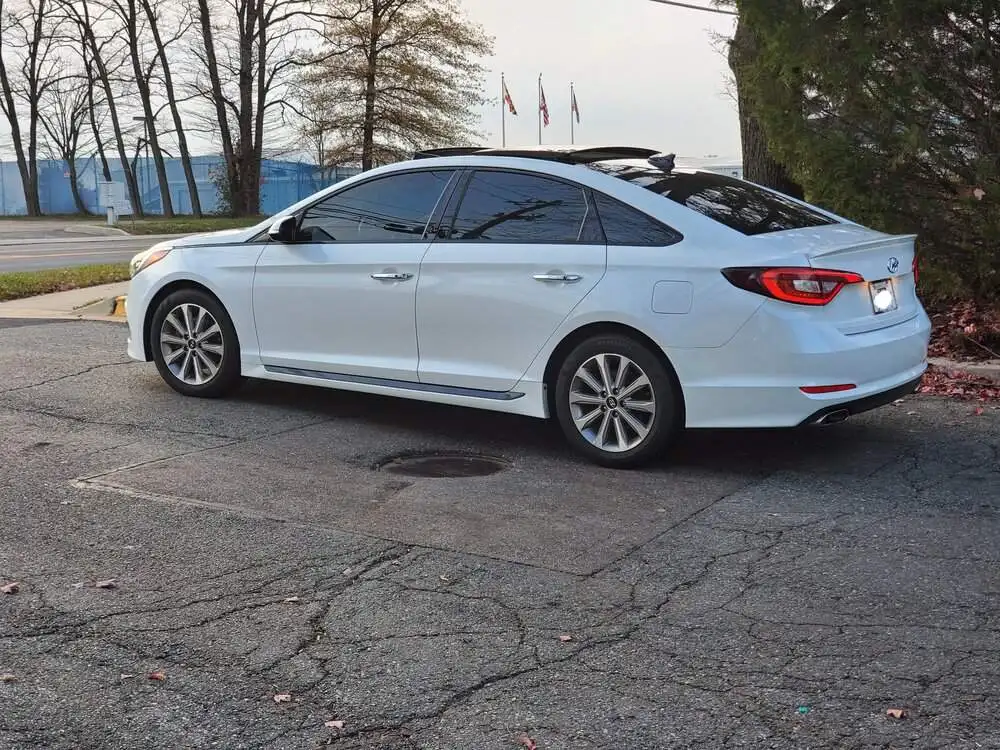
3M FX-ST 50 Window Film Example
Compare the options
FX-ST 50 Against Darker Shades and Heat Films
Where the lightest FX-ST sits, and what a light heat-first film changes.
Lightest FX-STFX-ST 50
- Visible light
- 45%
- TSER
- 50%
- UV blocked
- 99%
Glare reduction40%
A subtle tint and UV protection for drivers who want light glass.
Heat-first alternativeCeramic IR 50
- Visible light
- 50%
- TSER
- 54%
- Glare cut
- 32%
Infrared rejection83%
A similar light shade with 83 percent infrared rejection.
Lightest heat filmCrystalline CR 70
- Visible light
- 58%
- TSER
- 55%
- Glare cut
- 21%
Infrared rejection97%
Lighter than FX-ST 50 with 97 percent infrared rejection.
FX-ST figures from the 3M FX Standard Series data; heat-film figures from the 3M Ceramic IR and Crystalline Series data, all on Auto 75 glass. See the tint law in Dubai page for private car limits.
Before you choose
Three FX-ST 50 Myths
Three assumptions drivers make about light dyed film.
Myth
A 50 film is always legal in front
Fact
The finished reading depends on the glass. FX-ST 50 reads 45 percent on Auto 75 glass, below the limit, and 54 percent on clear glass. It is measured after fitting.
Myth
Light film gives no protection
Fact
FX-ST 50 blocks 99 percent of UV and rejects 50 percent of solar energy on Auto 75 glass.
Myth
For heat at a light shade, any film will do
Fact
FX-ST 50 rejects 7 percent of infrared. Crystalline CR 70 is lighter and rejects 97 percent.
Want a light, legal tint?
Tell us the car. We will check your factory glass and recommend a light film that measures legal after fitting.
Frequently Asked Questions About 3M FX-ST 50
Is FX-ST 50 a 50% tint?
It is a light FX-ST shade, but the final measured VLT depends on the vehicle's original glass as well as the film. Do not use the product number as a guaranteed final window reading.
Does FX-ST 50 block UV?
3M technical literature for the FX-ST Series lists up to 99% UV blocking. UV performance is separate from visible-light darkness, so a lighter film can still provide strong UV filtering.
Is FX-ST 50 good for privacy?
It offers less privacy than darker FX-ST shades because it transmits more visible light. Choose the shade according to the required balance between privacy, daylight and outward visibility.
Does FX-ST 50 interfere with GPS or mobile signals?
The FX-ST Series uses non-metallized construction, so it does not create the same signal-interference concern associated with some metal-containing films.
Is FX-ST 50 the best 3M film for heat rejection?
No single film is best for every goal. FX-ST is positioned as a practical automotive film range. Drivers prioritising stronger solar or infrared performance should also compare Color Stable, Ceramic IR and Crystalline.