

3M FX-ST Automotive Window Film
3M FX-ST is a practical non-metallized automotive window film range for UV protection, glare reduction, privacy and everyday solar control.
How 3M FX-ST Window Film Works
3M FX-ST is the value-focused branch of Car Cool’s automotive window film range. It uses a non-metallized dyed-polyester construction to reduce ultraviolet exposure, visible-light glare and part of the solar-energy load entering through vehicle glass.
FX-ST should be selected by measurable attributes rather than darkness alone. Compare visible light transmission (VLT), total solar energy rejection (TSER), UV rejection, glare reduction, outward visibility and the position of each glass panel. For stronger heat-management performance, compare 3M Color Stable, 3M Ceramic IR and 3M Crystalline.
FX-ST Performance: TSER, UV Rejection and VLT
Total solar energy rejection (TSER) is the percentage of total solar energy rejected by the filmed-glass system. 3M’s FX-ST technical sheet reports different TSER values depending on the reference glass used for testing. On Auto 75 reference glass, selected FX-ST configurations reach up to 61% TSER. On 6 mm clear reference glass, selected configurations reach up to 46% TSER. These figures should not be compared without the glass context.
Visible light transmission (VLT) describes how much visible light passes through the filmed glass. Lower VLT creates a darker appearance, increases privacy and generally increases glare reduction. Higher VLT preserves more daylight and outward visibility.
3M publishes up to 99% UV blocking for the FX-ST Series. Compare VLT, TSER, UV blocking and glare reduction together, then review the shade-specific pages for FX-ST 5, FX-ST 20, FX-ST 35 and FX-ST 50.
Privacy and Shade Selection
FX-ST privacy is primarily a function of VLT and lighting conditions. Lower-VLT shades transmit less visible light, so the cabin appears darker from outside. Higher-VLT shades maintain more daylight and outward visibility.
Choose a shade for the specific glass position and current vehicle requirements rather than treating the darkest option as automatically better. The FX-ST 50, FX-ST 35, FX-ST 20 and FX-ST 5 pages explain the individual shade positions in more detail.
Non-Metallized Construction and Signal Compatibility
FX-ST uses a non-metallized dyed-polyester construction. Because the film does not rely on a metallic layer, it is designed to avoid the radio-frequency interference associated with some metallized films.
That material relationship matters for modern vehicles using GPS, mobile connectivity, Bluetooth, keyless entry and connected infotainment systems. Signal performance also depends on the vehicle, antennas, glass and surrounding environment, so it is better described as a construction advantage than an absolute connectivity guarantee.
Reduce Glare
Glare reduction is closely related to VLT. A darker FX-ST shade transmits less visible light, which can reduce bright daytime glare and increase privacy. A lighter shade keeps more daylight and can be easier to see through in low-light conditions.
This is why shade selection should balance glare control, privacy, outward visibility and current vehicle requirements. For drivers who prioritize maximum heat rejection at a lighter appearance, compare the FX-ST range with Ceramic IR or Crystalline.
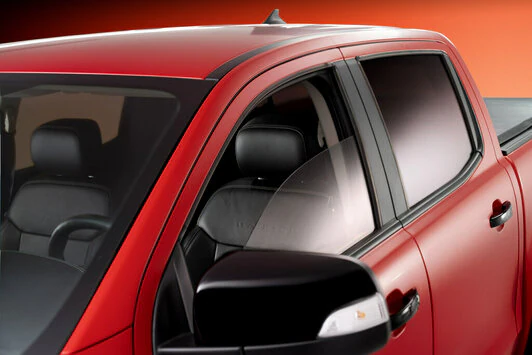
3M FX-ST Window Film Example
Frequently Asked Questions About 3M FX-ST
What is 3M FX-ST window film?
3M FX-ST is a non-metallized dyed-polyester automotive window film range designed for UV blocking, glare reduction, privacy and everyday solar control. It sits within Car Cool’s broader automotive window film range.
How much solar energy can FX-ST reject?
The result depends on the shade and the glass used for testing. 3M’s FX-ST technical sheet reports selected configurations reaching up to 61% TSER on Auto 75 reference glass and up to 46% TSER on 6 mm clear reference glass. Always compare the film together with the reference-glass condition.
Does FX-ST block UV?
3M publishes up to 99% UV blocking for the FX-ST Series. UV blocking helps reduce UV exposure through vehicle glass and one contributor to fading and deterioration of interior materials.
Which FX-ST shade should I choose?
Choose by VLT, privacy, glare reduction, outward visibility, the glass position and current vehicle requirements. Compare FX-ST 5, FX-ST 20, FX-ST 35 and FX-ST 50.
Does FX-ST interfere with GPS or mobile signals?
FX-ST is non-metallized, so its construction is designed to avoid the signal-interference issue associated with some metallized films. Actual reception can still depend on the vehicle, antennas, network coverage and surrounding environment.
How does FX-ST compare with Ceramic IR or Crystalline?
FX-ST is the simpler value-focused range. Ceramic IR and Crystalline are more relevant comparison pages when stronger heat-management performance at lighter visible-light levels is a higher priority.