

Commercial safety and security window film is the business-property application of Car Cool’s 3M Safety & Security Window Film system. Performance depends on the complete filmed glazing system. Commercial performance depends on the film, glass, frame, pane size, edge engagement and any attachment method specified for the risk.
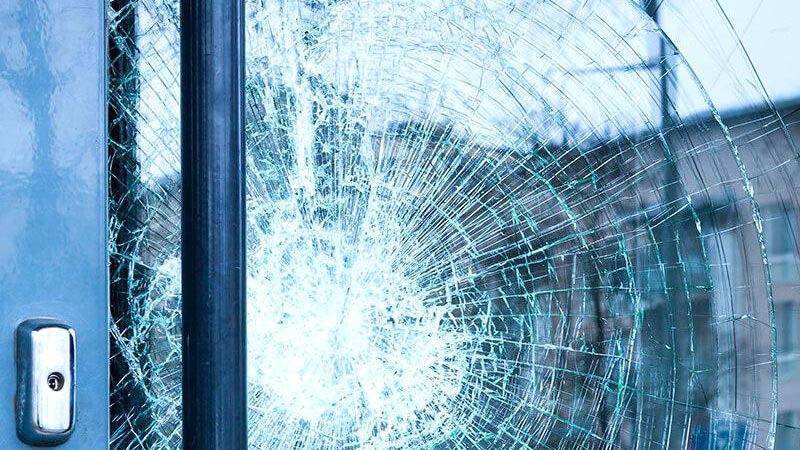
When glass breaks, safety film is intended to help retain fragments on the film. For forced-entry applications, a correctly specified film-and-attachment system may increase the time and effort required to create an opening. For higher-energy hazards, blast or other engineered conditions, the system must be designed for the specific project rather than described with blanket “blast-proof” or “impact-proof” language.
This commercial page is for offices, retail, hospitality, schools, healthcare and other business facilities. Home-specific applications belong on Residential Safety & Security Window Film, while the broader commercial-film selection process is covered by Commercial Window Film.
How Commercial Safety Film Systems Are Specified
Start by defining the hazard: accidental impact, broken-glass retention, vandalism, forced-entry delay or a higher-energy engineered threat. Then document the existing glazing: glass type and thickness, pane dimensions, frame material and condition, edge bite and surrounding construction.
The film specification follows from that assessment. Thickness and construction are selected for the requirement, and an attachment system may be added where the objective is to retain the filmed broken glass more securely within the frame. Installation quality matters because edge treatment, contamination, seams and attachment continuity affect the final system.
Project-specific compliance, testing or engineering requirements should be checked against current documentation for the selected system. Car Cool should not substitute generic marketing wording for a required technical specification.
Commercial Applications and System Boundaries
Storefronts and entrances: safety film can help retain broken glass and, when designed as part of a tested security system, may increase the time and effort required to create an opening. Offices and internal partitions: fragment retention can reduce loose-glass hazards after accidental impact. Schools, clinics and public-facing facilities: a specified system can support glazing-risk management where occupant exposure is a concern.
Film does not make glass unbreakable and should not be described as bulletproof or blast-resistant unless the complete installed system has been engineered and tested for that specific threat. Commercial projects should be specified against the actual hazard, glass construction, frame and attachment method. For residential applications, see Residential Safety & Security Window Film.
GALLERY
Frequently Asked Questions About Commercial Safety & Security Window Film
What does commercial safety window film do when glass breaks?
It helps hold broken glass fragments together after impact, reducing loose shards and helping the pane remain as a bonded sheet for longer.
Does security film stop a break-in?
Security film can increase resistance and delay creation of an opening when the film, glass, frame and attachment system are properly specified. It cannot guarantee that entry will never occur.
Is commercial safety film bulletproof?
No. Standard architectural safety and security film should not be described as bulletproof. Ballistic protection requires a purpose-designed and tested glazing system.
Does the frame matter?
Yes. Film strength alone does not determine system performance. Frame condition, edge engagement and attachment method can materially affect how filmed glass behaves after impact.
Can safety film be installed on existing commercial glass?
Often yes, subject to a survey of glass type, thickness, pane size, frame condition and the required hazard level. Compatibility should be confirmed before specification.
Is safety film the same as solar-control film?
No. Safety film is selected primarily for glass retention and security performance. Solar-control film is selected primarily for heat, glare, daylight and UV management, although some specialised systems can combine functions.