

Blackout Window Film in Dubai: Opaque Privacy and Light Blocking
Blackout window film is an opaque glass-film solution for spaces where the central requirement is to restrict both visibility and transmitted light. Unlike reflective privacy film, it does not depend on the lighting difference between inside and outside, and unlike frosted film, it is not intended to preserve a bright, diffused view through the pane.
The key attributes are opacity, visible-light transmission, colour, coverage and glass compatibility. A black or white opaque film can change how the glass looks from each side, while the selected construction determines how much light passes through. Avoid treating every blackout film as exactly 100% light-proof unless the product specification confirms it.
For bedrooms, nurseries and other home-specific use cases, see Residential Blackout Window Film.
How Blackout Window Film Changes Glass
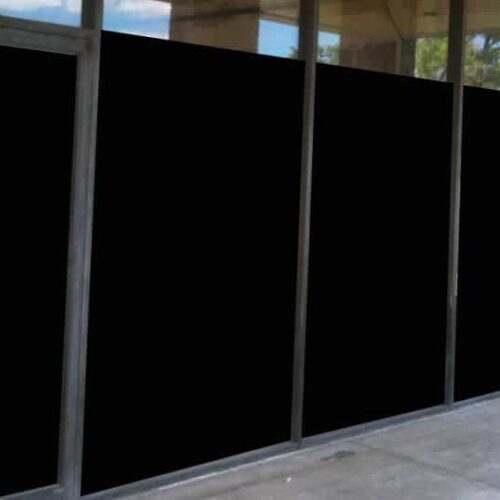
Opacity → visual privacy: an opaque film prevents a clear view through the covered glass from either direction. That makes it suitable where visual separation is more important than maintaining an outside view.
VLT → light level: visible-light transmission describes how much visible light passes through the film and glass together. Very low VLT produces a darker space, but the exact result must come from the selected product’s technical data.
Colour → appearance: black, white and other opaque finishes change the interior and exterior appearance differently. Film colour should be selected with the room design, facade appearance and glass location in mind.
Coverage → privacy zone: full-pane installation provides maximum obscuration. Partial coverage can create a blackout band while leaving another area of the glass open.
Where Blackout Window Film Is Used
Common applications include glass storage rooms, back-of-house areas, internal partitions, meeting rooms, studio spaces and windows where a transparent opening is no longer required. In homes, blackout film can be used for bedrooms, nurseries, media rooms and exposed utility areas, with room-specific advice in our Residential Blackout Window Film page.
Installation should begin with a compatibility check for the glass type and intended location. The pane is cleaned, the film is cut to fit, applied with the appropriate mounting solution and finished at the edges. Large panels and highly visible areas benefit from professional installation to reduce contamination, creasing and inconsistent seams.
Black, White and Opaque Blackout Film Options
Black opaque film creates a dark appearance and is often chosen where the glass should visually recede. White opaque film creates a brighter, neutral finish and can suit partitions or back-of-house glazing where a dark surface would feel heavy. Other specialist opaque finishes may be available depending on the project.
Colour alone does not define performance. Compare the actual film specification for visible-light transmission, exterior reflectance, interior appearance, thickness and compatible glass types. For decorative translucency rather than blackout, use frosted film for glass or 3M FASARA.
GALLERY
Frequently Asked Questions About Blackout Window Film
Does blackout window film block all light?
Blackout films are designed for very low visible-light transmission, but do not assume a universal 100% value. Confirm the VLT and opacity of the exact product being specified.
Is blackout film the same as privacy tint?
No. Privacy tint generally preserves some visibility and daylight. Blackout film is opaque or near-opaque and is selected when visual separation and light blocking are the priority.
Can blackout film be used on office glass?
Yes, subject to glass compatibility. It can be useful on meeting rooms, storage areas, internal partitions and back-of-house glazing where a clear view is not needed.
What is the difference between black and white blackout film?
Both can provide strong obscuration, but they create different interior and exterior appearances. The exact light transmission and reflectance should be checked in the product specification rather than inferred from colour alone.
Can blackout film be removed later?
Many architectural films can be removed from compatible glass, but adhesive condition, age and glass type affect the removal process. Professional removal reduces the risk of residue or damage around seals and edges.
Is blackout film suitable for bedrooms?
Yes. For bedroom, nursery and home-specific considerations, see our Residential Blackout Window Film page.