

Increase Privacy Without Losing Natural Light
You can increase privacy without losing natural light by using frosted window film, light-filtering roller or cellular shades, sheer curtains, top-down/bottom-up blinds, spectrally selective solar film, decorative privacy film, interior shutters with adjustable louvers, smart (switchable) glass or retrofit switchable film, and architectural glass blocks. These solutions preserve daylight, reduce glare, and can block UV and limit heat—with 24/7 privacy from frosted or switchable options and daytime privacy from reflective/one-way mirror films (pair with curtains at night). Choose by intent (informational learning, brand navigation, or purchase/installation), room type, visible light transmission (VLT) target, view preference, and local rules.
What You Must Know First: Central Intent & Definitions
You’re here to increase privacy without losing natural light. The central entity is window privacy solutions; the central search intent is keeping daylight while obscuring the view. We’ll use simple terms and practical steps.
Key terms (highlighted for clarity): privacy window film, natural light, light diffusion, visible light transmission (VLT), UV protection, glare reduction, thermal control, daytime privacy, 24/7 privacy, switchable glass, smart film, decorative glass film, mirror effect, residential reflective film, commercial window film, automotive window tinting (contextual comparison), security window film, architectural finishes, glass partitions.
Why this matters: Most people want privacy without turning rooms dark. The right mix of materials and placement lets you keep the view or soften it, while maintaining comfort, energy efficiency, and style.
How Window Privacy Solutions Work (Light, VLT, UV, and Heat)
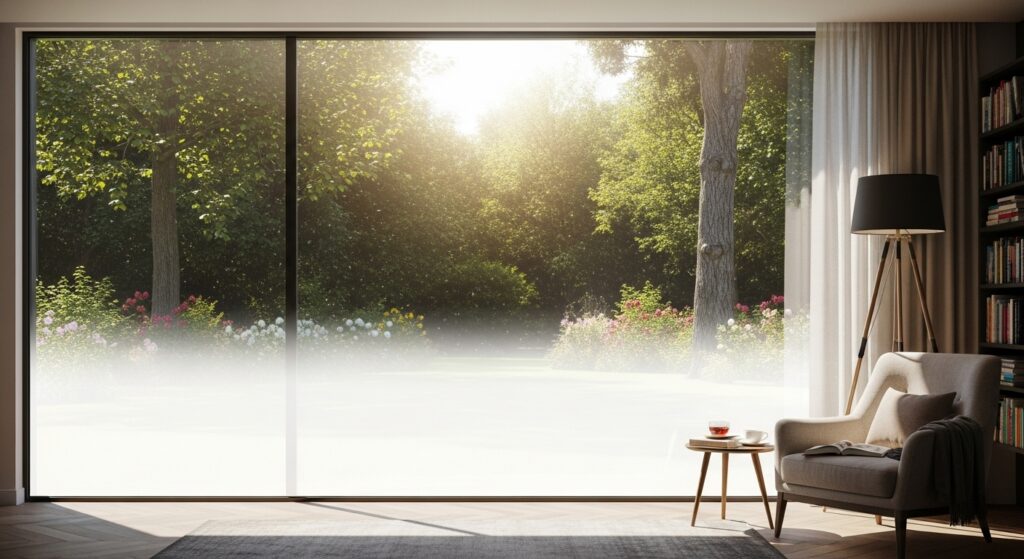
Light diffusion: Frosted and textured films use tiny patterns to scatter light, creating a soft, diffused glow that keeps spaces bright.
VLT (Visible Light Transmission):
- Higher VLT = more daylight.
- For privacy without gloom, aim for medium-high VLT films or light-filtering fabrics.
UV & heat: Many films block most UV and limit solar heat gain, helping protect furnishings and reduce hot spots. Spectrally selective films target infrared heat while keeping visible light high.
Privacy mechanism:
- Frosted/decorative films: 24/7 privacy (both day and night).
- Reflective films: daytime privacy only; at night, lights inside reverse the effect—pair with curtains or shades.
Intent-Based Guide You Must Use to Choose the Right Option
Different readers have different goals. Use the path that matches your intent.
Informational Intent: Learn Options & Principles
- What’s the difference between frosted film and reflective (one-way) film?
- How do spectrally selective films keep rooms bright but cooler?
- When should I consider smart glass or switchable film?
Navigational Intent: Find Local Providers & Specs
- Search for privacy window film installers and check VLT, UV, and warranty specs.
- Look for sample books for decorative patterns and gradient frosts.
- Confirm local building guidelines on VLT for residential façades.
Transactional Intent: Compare, Budget, and Install
- Shortlist two to three solutions.
- Request quotes with VLT, UV, IR rejection, and thickness.
- Compare day vs. night privacy and maintenance before you buy.
Top Solutions That Must Keep Daylight While Adding Privacy
Frosted & Decorative Privacy Films (24/7 privacy, bright feel)
- What they do: Turn clear glass into an opaque surface that still passes light.
- Best for: Bathrooms, entry doors, glass partitions, ground-floor windows.
- Options: Standard frost, textured frost, gradient frost, patterned decorative film (geometric, organic, or custom).
- Benefits: Natural light, consistent privacy, UV protection, easy to clean, reversible (removable).
- Long-tail/LSI to note: bathroom privacy film, frosted glass film, glass partition film, residential privacy solutions, light diffusion.
Spectrally Selective Solar Films (bright, cooler rooms)
- What they do: Filter infrared heat while keeping visible light high for clarity.
- Best for: Sun-facing rooms with glare or hot spots where you still want a clear view out.
- Benefits: Thermal comfort, energy efficiency, UV protection with minimal tint.
Reflective (One-Way) Mirror Films (daytime privacy)
- What they do: Create an exterior mirror effect during daylight for privacy.
- Caution: At night, with lights on inside, privacy reverses. Pair with sheers or roller shades.
- Best for: Street-level windows with daytime foot traffic.
Sheer Curtains & Layered Drapery (soft look, flexible control)
- What they do: Soften sunlight and blur views while keeping a light, airy vibe.
- Tip: Layer with light-blocking drapes for night privacy.
Top-Down/Bottom-Up Shades (privacy at eye level)
- What they do: Lower from the top to keep daylight, keep the bottom closed for street privacy.
- Best for: Townhouses, apartments, and rooms facing neighbors.
Light-Filtering Roller & Cellular Shades (balanced privacy + light)
- What they do: Use light-filtering fabrics to let daylight in while blurring the view.
- Bonus: Cellular shades add insulation for thermal comfort.
Interior Shutters with Adjustable Louvers (directional control)
- What they do: Angle louvers to block lines of sight while steering daylight up or down.
- Aesthetic: Classic and long-lasting.
Smart (Switchable) Glass or Switchable Film (on-demand privacy)
- What they do: Toggle from clear to frosted with a switch or app.
- Best for: Bathrooms, meeting rooms, and feature partitions.
- Note: Needs power, higher upfront cost, low maintenance.
Architectural Glass Blocks (permanent privacy + light)
- What they do: Distort views while transmitting daylight; durable and architectural.
- Best for: New builds or renovations where structure allows.
Comparison Map You Must See: Day vs. Night Privacy, Light, and Heat
- 24/7 Privacy: Frosted/decorative films, smart glass, glass blocks.
- Daytime-only Privacy: Reflective mirror films (pair with sheers/roller shades for night).
- Best Daylight Clarity: Spectrally selective films, light-filtering roller shades.
- Strong Heat Control: Spectrally selective films, cellular shades (insulation), reflective films on sun-exposed façades.
- Most Flexible Everyday Use: Top-down/bottom-up shades + sheers.
- Design-Forward: Gradient frost, patterned decorative films, architectural finishes (wood/stone look for frames or partitions), glass blocks.
Room-By-Room Playbook (Bathrooms, Kitchens, Living Rooms, Home Offices)
Bathrooms (must protect privacy, keep brightness)
- Go-to: Frosted film, textured frost, or switchable film.
- Why: Moisture-resistant, easy to clean, full privacy with soft daylight.
- Tip: Use gradient frost for upper-light and lower privacy.
Kitchens (must keep natural light, reduce glare)
- Go-to: Light-filtering roller shades or spectrally selective film.
- Why: Keep work surfaces bright without glare; maintain view where desired.
- Tip: If facing the street, top-down/bottom-up helps daytime privacy.
Living Rooms (must balance view, heat, and comfort)
- Go-to: Spectrally selective film for clear views + heat control.
- Add-on: Sheers for ambiance, cellular shades for insulation.
- Note: If street-level, consider reflective film + evening drapery.
Home Offices (must reduce glare, protect screen privacy)
- Go-to: Light-filtering fabric shades or frosted film on partial panels.
- Why: Soft, even light improves focus and reduces eyestrain.
- Tip: Angle shutters or louvers to cut monitor glare.
Maintenance & Care (Keep Films Clear and Long-Lasting)
- Clean gently: Soft cloth + mild cleaner; avoid abrasives.
- Protect edges: Don’t pick at corners; avoid sharp tools near glass.
- Watch heat: Keep distance from intense heat sources when possible.
- Check periodically: Look for peel or bubbles and address early.
- Fabric shades & sheers: Dust lightly; follow maker’s washing guidance.
- Smart film/glass: Wipe as directed; ensure power and controls are safe from moisture.
People Also Ask (PAA): Quick Q&A You Must Know
Does privacy film let in natural light?
Yes. Frosted and light-diffusing films allow daylight while blurring views. Spectrally selective films keep rooms bright and cooler.
Which window privacy option works at night?
For 24/7 privacy, choose frosted/decorative films, smart (switchable) glass/film, or glass blocks. Reflective films are daytime privacy only; at night, use sheers or shades.
What is the best privacy window film for bathrooms?
A standard frost or textured frost gives full privacy with a soft glow. Gradient frost works when you want a clear top band for extra daylight.
Can window films reduce heat and UV?
Yes. Many films block most UV and limit infrared heat, helping with fade protection and comfort.
How do I choose the right VLT?
Aim for a higher VLT when you prioritize daylight. If glare is a problem, choose light-filtering fabrics or spectrally selective films that cut heat without darkening.
Are there privacy options for renters?
Try static-cling frost, sheer curtains, or removable roller shades that don’t require permanent changes.
Conclusion: A Clear Path to Privacy + Daylight
You don’t have to choose between privacy and natural light. Start with your room’s intent (bathroom, kitchen, living room, home office), then pick from frosted/decorative film, spectrally selective film, reflective mirror film (with an evening plan), light-filtering fabrics, top-down/bottom-up shades, shutters, smart glass, or glass blocks.
Check VLT, UV/IR performance, and night behavior. View samples in real light before deciding. With the right match, you’ll get comfort, clarity, and privacy—all at once.