

3M FX-ST 5 Car Tint in Dubai
Dark FX-ST shade for maximum privacy, low visible-light transmission and UV protection.
Quick answers
FX-ST 5 in Four Numbers
The published figures for FX-ST 5, and what each one means for your car.
Visible light
4%
Near-total privacy from outside during the day.
Glare cut
95%
The strongest glare reduction in the FX-ST range.
Infrared rejected
8%
The same as FX-ST 50. The dark shade does not add infrared rejection.
Legal on a private car?
No
Far below the 50 percent limit for a private car’s side and rear glass, so it needs an approved exemption.
3M FX Standard Series data on Auto 75 factory-tinted glass. Full figures, including 6 mm clear glass, are on this page.
3M FX-ST 5 is the darkest FX-ST shade. On Auto 75 factory-tinted glass 3M lists it at 4 percent visible light, 61 percent total solar energy rejected, 95 percent glare reduction and 99 percent UV blocking, but only 8 percent infrared rejection in the 900 to 1,000 nm band. Choose it for maximum privacy on rear glass, not for extra heat control.
3M FX-ST 5 is the darkest shade in the 3M FX-ST window film family. Its central role is simple: very low visible-light transmission creates a dark appearance and high daytime privacy while the film also provides the UV and solar-control characteristics of the FX-ST series.
Because darker film also reduces the light available for outward vision, FX-ST 5 should be chosen for the correct glass position and current vehicle requirements, not simply because it is the darkest option. If you want a lighter balance, compare FX-ST 20, FX-ST 35 and FX-ST 50.
3M FX-ST Window Film 5 Specifications at a Glance
3M reference data on Auto 75 glass: FX-ST 5 is listed at 4% VLT, 99% UV blocking, 61% TSER, 95% glare reduction, 8% IRR and 54% IRER.
3M reference data on 6 mm clear glass: FX-ST 5 is listed at 4% VLT, 99% UV blocking, 46% TSER, 95% glare reduction, 8% IRR and 24% IRER.
What this means: FX-ST 5 is the darkest shade in this Car Cool FX-ST group. Its very low VLT supports high daytime privacy and strong glare reduction, but it also reduces outward visible light more than FX-ST 20, 35 or 50. The two TSER figures are not contradictory because they were measured on different reference glass systems.
Use these figures as product-comparison data, then confirm the actual shade and glass position before installation. Compare the FX-ST parent range or move to FX-ST 20 if you want more visible light.
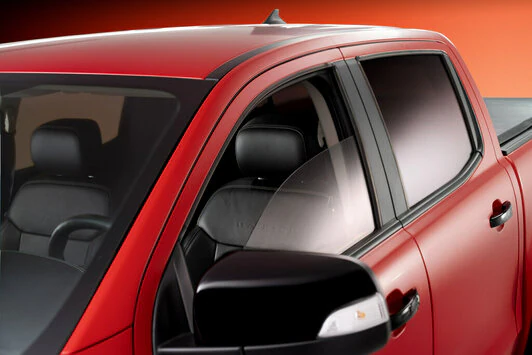
3M FX-ST 5 Window Film Example
Compare the options
FX-ST 5 Against Lighter Shades and Heat Films
What you gain and give up with the darkest FX-ST, on Auto 75 glass.
Darkest FX-STFX-ST 5
- Visible light
- 4%
- TSER
- 61%
- UV blocked
- 99%
Glare reduction95%
Maximum privacy and glare control. Night visibility through it is reduced.
LighterFX-ST 20
- Visible light
- 20%
- TSER
- 57%
- UV blocked
- 99%
Glare reduction74%
Strong privacy with better outward visibility at night.
Heat-first alternativeCeramic IR 5
- Visible light
- 5%
- TSER
- 66%
- Glare cut
- 93%
Infrared rejection95%
The same darkness with 95 percent infrared rejection instead of 8 percent.
Lightest FX-STFX-ST 50
- Visible light
- 45%
- TSER
- 50%
- UV blocked
- 99%
Glare reduction40%
A subtle tint with UV protection and moderate glare control.
FX-ST figures from the 3M FX Standard Series data; heat-film figures from the 3M Ceramic IR and Crystalline Series data, all on Auto 75 glass. See the tint law in Dubai page for private car limits.
Before you choose
Three FX-ST 5 Myths
Three assumptions drivers make about the darkest dyed film.
Myth
Limo black keeps the car coolest
Fact
FX-ST 5 rejects 8 percent of infrared in the 900 to 1,000 nm band, exactly like FX-ST 50. For heat, Ceramic IR 5 rejects 95 percent at a similar shade.
Myth
A dark film is fine on the front windows
Fact
At 4 percent it is far below the 50 percent limit for private cars, and it makes night driving harder. It belongs on the rear glass.
Myth
Dyed film means cheap film
Fact
FX-ST is genuine 3M film with 99 percent UV blocking. It is the right choice when privacy, not heat, is the goal.
Want full rear privacy?
Tell us the car. We will fit FX-ST 5 or a heat-first alternative on the rear and a legal shade in front.
Frequently Asked Questions About FX-ST 5
What is FX-ST 5 mainly for?
FX-ST 5 is the darkest FX-ST shade in this Car Cool group. It is primarily selected for a very dark appearance, high daytime privacy and strong glare reduction.
What does 3M publish for FX-ST 5?
On Auto 75 reference glass, 3M lists 4% VLT, 99% UV blocking, 61% TSER and 95% glare reduction. On 6 mm clear reference glass, it lists 4% VLT, 99% UV blocking, 46% TSER and 95% glare reduction. The different TSER values reflect different reference glass systems.
Does a darker shade automatically mean better heat rejection?
No. Darkness is described by VLT. Solar-energy performance is compared with metrics such as TSER, so the complete film-and-glass specification matters.
How does FX-ST 5 compare with FX-ST 20?
FX-ST 5 transmits less visible light, so it gives a darker appearance and more privacy. FX-ST 20 allows more visible light and is a better comparison if outward visibility is a higher priority.
Will FX-ST 5 interfere with GPS or mobile reception?
FX-ST is non-metallized. 3M states that the series is designed not to interfere with cell phones, GPS systems or satellite radio, although reception can still be affected by unrelated vehicle, device and network factors.
Is FX-ST 5 suitable for every vehicle window?
No. The correct choice depends on the existing glass, glass position, vehicle and current local requirements. Confirm the final configuration before installation.
Appearance, reflectivity and signal behaviour
3M FX-ST 5 is dyed polyester with a non-metallised construction. Non-metallised film keeps exterior reflectivity low, so from outside the glass reads as dark rather than mirrored, and it carries none of the signal-interference concern associated with metal-containing films. GPS, mobile data and 5G are unaffected. If low exterior reflectivity matters for the look of the car, this is the attribute to compare, not the shade number.
What the law allows in Dubai
The UAE permits up to 50 percent tint on the side and rear windows of a private vehicle, and the front windscreen must stay clear unless an exemption has been approved. At a nominal 5 percent visible light transmission, FX-ST 5 sits far below the permitted limit, so on a private car it is normally a rear-privacy choice or an exemption-only shade rather than something to fit to the front side windows. The reading is taken on the finished window, which is the film plus the glass already fitted to the car, so a nominal shade number does not by itself prove compliance. Have the installed glass measured before you commit. See car window tint law in Dubai for the limit, the fine and how exemptions work.
Warranty and documentation
3M warranty terms vary by market, film version, installer and documentation. Before installation, confirm the exact film series and shade being fitted, the written warranty term that applies to it, and what that term covers. Keep the invoice and the product documentation supplied with the job. Clear product identification and a proper invoice are stronger trust signals than a general performance claim.
What it costs
Price is driven by the film series, how many glass panels are covered, the shape of the glass, whether old film has to be removed first, and the warranty attached. See what car window tinting costs in Dubai, and car tint removal if the vehicle already has film on it.