

Car Polishing in Dubai
Professional car polishing and paint correction for reducing suitable swirl marks, oxidation, haze and clear-coat defects while restoring gloss.
Quick answers
Car Polishing in Dubai: Four Quick Answers
What drivers ask before booking paint correction, answered directly.
What it fixes
Clear coat
Swirls, wash marring, holograms, haze, oxidation and light scratches that sit inside the clear coat.
Quick test
Fingernail
A scratch that catches a fingernail may be too deep for complete removal, so its depth and the available paint thickness should be assessed before correction.
Unlimited?
No
Polishing removes clear coat, which does not grow back. Correction is planned so paint is not polished thin.
What comes after?
Protect
Where correction is required, it is normally completed before coating or PPF so visible correctable defects are not left beneath the protection.
Car Body Polishing and Paint Correction in Dubai
Car polishing and paint correction use machine abrasives to level a controlled amount of clear coat, reducing or removing suitable swirls, wash marring, haze and light scratches while improving gloss. Polishing cannot restore missing paint or damage that has penetrated beyond the safely correctable clear coat, and deeper scratches may require paint repair rather than further correction. Polish before any coating or film, because both lock in the paint as it is.
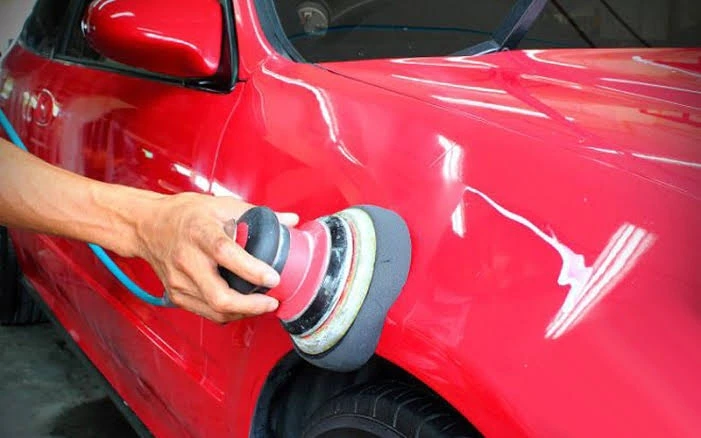
Car polishing is an abrasive paint-refinement process used to improve the appearance of suitable defects in the vehicle’s clear coat. Unlike a wax or sealant, polishing does not simply cover the surface. A polishing compound, pad and machine combination removes a controlled amount of paint or clear coat to level fine defects and improve reflected light.
Typical correction targets include wash-induced swirl marks, light clear-coat scratches, oxidation, water-spot etching, haze and loss of gloss. Results depend on defect depth, paint thickness, previous polishing, repaint history and the hardness of the paint system.
Not every scratch can or should be removed. If a defect is too deep, aggressive polishing may remove too much clear coat. A professional inspection should therefore come before correction. After polishing, the refined finish can be protected with ceramic coating, wax or another suitable product. For stone-chip exposure, PPF serves a different protective role.
Which Paint Defects Can Car Polishing Improve?
Swirl marks and wash marring: fine circular or directional marks in the clear coat can often be reduced significantly when enough safe paint thickness is available.
Oxidation and dullness: polishing can remove a weathered surface layer and restore clarity where the paint system is still healthy enough to correct.
Light scratches: scratches confined to a correctable portion of the clear coat may be reduced or removed. Scratches that penetrate too deeply should not be chased aggressively just to make them disappear.
Water spotting and etching: some mineral deposits sit on the surface and can be removed through decontamination, while etched marks may require polishing. Deep chemical etching may remain partly visible.
Holograms and previous machine marks: incorrect polishing can leave rotary trails or haze. A suitable refining stage can improve these defects.
Polishing cannot repair dents, missing paint, stone chips, cracks or damage that has penetrated through the paint system. Those require a different repair process.
Paint Inspection and Choosing the Right Correction Level
At Car Cool every polishing job starts with paint thickness gauge readings on the panels to be corrected and an inspection under dedicated inspection lights, so the correction stage is chosen for the clear coat that is actually there. The technician needs to distinguish contamination from actual paint defects and identify repainted panels, thin areas, edges and previous correction where possible.
One-step polishing is generally used when the goal is gloss enhancement and reduction of lighter defects with a balanced cut-and-finish process. Multi-stage correction uses a more aggressive defect-removal stage followed by refining, and is appropriate only when the paint condition and thickness allow it.
The objective should be the best safe improvement, not a promise of 100% defect removal. Preserving clear coat matters because polishing removes material each time it is performed.
If the vehicle mainly needs cleaning rather than correction, start with car detailing. If the corrected paint needs easier maintenance and hydrophobic protection afterward, consider ceramic coating. If road-impact protection is the priority, use PPF.
How Car Polishing and Paint Correction Work
1. Wash and decontaminate: loose and bonded contamination should be removed before polishing so grit is not dragged across the paint and defects can be assessed accurately.
2. Inspect and test: evaluate the paint under controlled lighting and, where appropriate, use a test area to find the least aggressive combination that achieves the required improvement.
3. Correct: machine polishing uses a selected compound or polish, pad and machine action to level a controlled amount of clear coat around defects. Heat, pressure, pad cleanliness and working time must be managed carefully.
4. Refine: when a cutting stage leaves haze or micro-marring, a finishing polish can restore clarity and gloss.
5. Protect: freshly polished paint should receive an appropriate protection product. Wax or sealant can be used for shorter-term protection, while ceramic coating provides a different longer-term surface treatment. PPF is considered when physical impact protection is required.
GALLERY
Polishing, Detailing, Coating and PPF: What Each One Fixes
Polishing is the corrective stage used when visible clear-coat defects need to be reduced before protection is applied. It is worth being precise about what it is.
- Polishing removes a controlled, measured amount of clear coat to level defects that sit inside it: swirl marks, wash marks, oxidation, haze and light scratches. Because it removes material, it is finite. Clear coat is not renewable.
- Detailing cleans and decontaminates. It removes what sits on top of the paint. Cleaning and decontamination should come before polishing because some apparent paint defects are surface contamination rather than defects that require clear-coat correction.
- Ceramic coating is a chemical layer applied after correction that changes how the surface sheds water and dirt. It does not remove defects; it preserves whatever state the paint is in.
- Paint protection film is a physical layer that absorbs impact. PPF provides a physical sacrificial layer over the paint, but it does not correct existing defects beneath the film.
That last point is the practical reason polishing comes first. Ceramic coating and transparent PPF do not remove existing paint defects, so visible swirls can remain visible beneath them unless the paint is corrected first.
What polishing cannot fix: anything that has gone through the clear coat into the base coat, deep scratches that catch a fingernail, stone chips, and etching that has reached bare metal or primer. Those are paint repair, not correction. An honest assessment says which defects will be removed, which will be reduced and which will not respond at all, before any machine touches the car.
How deep to go
One-Step, Two-Step or Multi-Stage Correction
The correction stage influences defect removal and material removal, while the actual result depends on defect depth, paint system, available thickness, abrasives and technique. We recommend the lightest stage that gives the result.
One-step polish
A single finishing polish that lifts gloss and removes light marring. Suits newer cars and cars going straight to coating.
Two-step correction
A cutting stage removes swirls and marring, then a finishing stage restores clarity. Suitable when the inspected paint needs more defect removal than a one-step process can safely achieve.
Multi-stage correction
Several cutting and refining passes for heavily swirled or oxidised paint, planned panel by panel.
| Defect | Polishing result |
|---|---|
| Swirl marks and wash marring | Removed or greatly reduced |
| Haze and holograms from poor machine work | Removed |
| Oxidation and dull, faded clear coat | Usually restored |
| Light scratches inside the clear coat | Removed or reduced |
| Scratch that catches a fingernail | Reduced at best, often needs repair |
| Stone chips and damage to primer or metal | Not fixed, needs paint repair |
Results are general to machine paint correction. Each car is inspected under light before we say which defects will go.
Why Car Paint Needs Polishing in the UAE
Most of the defects a vehicle polishing job removes are caused by everyday care, not accidents:
- Brush car washes and dry-wiping dust: fine sand dragged across the paint leaves the circular swirl marks that show in direct sun.
- Bird droppings and tree sap can stain or etch clear coat, particularly when contamination remains on hot paint, so they should be removed promptly.
- Hard-water spots: water that dries on hot panels leaves mineral marks that washing alone does not lift.
- Long-term environmental and UV exposure can contribute to paint weathering, fading and oxidation, with the effect depending on the paint system and its condition.
Dark and black paint shows these defects the most, which is why exterior paint polishing is often requested on black cars first. Paint polish removes a controlled amount of clear coat to level the surface; it does not add a protective layer, so ceramic coating or PPF is often applied afterwards.
For a closer look at what causes these marks and how to prevent them, read our guide to swirl marks on car paint.
What Decides the Price of Car Polishing in Dubai
Car polishing is quoted after the paint is inspected, because the same car can need very different work. The main factors are:
- Correction level: a one-step polish takes less time than a two-step or multi-stage correction.
- Defect depth and paint hardness: deeper marks and harder clear coats need more passes to correct safely.
- Vehicle size: a large SUV has far more painted surface than a compact car.
- Protection afterwards: adding ceramic coating or PPF after polishing is quoted as a separate stage.
Call 050 707 1892 or send photos of the paint in daylight on WhatsApp for a quotation.
Machine Polishing, Luxury Cars and Polishing Before a Sale
Machine polishing: professional body polishing uses a machine polisher with matched pads and compounds. Hand polishing can improve gloss and some minor defects, but machine polishing provides more consistent controlled correction across larger painted areas.
Luxury and new cars: even new cars can arrive with light marring from transport and dealer preparation, so a light polish before coating or film is common on premium cars.
Before selling a car: removing swirls and haze improves how the paint looks in listing photos and at inspection. Deep scratches and chips still need paint repair rather than polishing.
How often: because every correction removes some clear coat, polishing should be done when needed, not on a fixed schedule. Protecting the paint afterwards reduces how often it is needed.
Before you book
Car Polishing Myths
Three beliefs that lead to thin paint or wasted money.
Myth
Polishing and waxing are the same
Fact
Wax adds a temporary surface layer that can improve gloss and may visually mask some very fine defects, with durability depending on the product and conditions. Polishing removes the defect by levelling the clear coat.
Myth
A car can be polished as often as you like
Fact
Every correction removes some clear coat, which is finite. Careful washing can reduce new wash-induced marring and therefore reduce how frequently corrective polishing is needed.
Myth
Polishing fixes every scratch
Fact
Only defects inside the clear coat. Chips and scratches through to paint or primer need repair, not more polishing.
Paint looking dull or swirled?
Send photos in daylight and under a torch. We will tell you which defects will go, which stage is needed and whether coating or PPF should follow.
Know the terms
Car Body Polishing, Buffing and Compounding: What the Terms Mean
Quotes in Dubai use several words for the same work. These are the terms and what each one actually does to the paint.
Car body polishing
Machine polishing of the painted body panels. It levels a very thin layer of clear coat so swirls and marring stop scattering light, which brings the gloss back.
Buffing
The everyday word for machine polishing. Buffing and polishing usually describe the same step, done with different pads and products.
Compounding
The first, more aggressive cutting stage used for deeper swirls, oxidation and water-spot etching, before a finer polish refines the finish.
Finishing polish
The final fine polishing stage reduces compounding haze and micro-marring to improve paint clarity and gloss.
Paint correction
The whole process of removing defects in measured stages after an inspection. One-step, two-step and multi-stage are levels of paint correction.
Polish vs wax
Polish removes and levels, wax adds a temporary layer on top. Wax cannot remove swirls, and polish alone leaves the paint unprotected.
Car Polishing FAQs in Dubai
Does car polishing remove all scratches?
No. Polishing can reduce or remove defects that are within a safely correctable part of the clear coat. Deep scratches, chips and damage through the paint may remain and can require repair rather than further polishing.
What is the difference between polishing and waxing?
Polishing is abrasive and corrects suitable surface defects. Wax adds a temporary protective layer and gloss but does not level scratches in the clear coat.
What is one-step vs multi-stage paint correction?
One-step polishing balances defect reduction and finishing in one machine-polishing stage. Multi-stage correction uses a stronger cutting stage followed by refining and is used when the paint condition and safe thickness justify more correction.
Can I apply ceramic coating after polishing?
Yes. Polishing is commonly used to prepare and refine paint before ceramic coating. The paint must then be cleaned of polishing residue so the coating can bond correctly.
How often should a car be polished?
Only when the paint condition justifies it. Because polishing removes a controlled amount of clear coat, it should not be treated as routine washing or performed unnecessarily.
Can polishing fix faded or oxidised paint?
It can improve many cases of surface oxidation and dullness, but results depend on paint condition. Clear-coat failure, peeling or severe damage cannot be safely corrected with polishing alone.
Will polishing protect the paint afterward?
Polishing itself is correction, not durable protection. Apply a suitable wax, sealant, ceramic coating or PPF afterward based on the protection required.
How much does car polishing cost in Dubai?
Pricing depends on vehicle size, paint condition, correction target and number of polishing stages. A meaningful quote should follow a paint inspection rather than rely only on vehicle size.
Polishing is the correction step, not the protection step. Once the paint is corrected, ceramic coating changes how the surface behaves and eases maintenance, while paint protection film adds a physical sacrificial layer over selected panels. Detailing covers the wider clean and restoration. Polishing removes material from the clear coat, so it is done by defect and paint condition rather than on a schedule.
Car Cool is a 3M Authorised Autocare Center working from a workshop at Al Khabaisi, Dubai. Read customer reviews or more about how we specify a job.
Where can I get my car polished near me in Deira?
Car Cool polishes cars at 157 Al Ittihad Road, Al Khabaisi, Deira, near Abu Hail Metro, open 9 AM to 11 PM daily. The paint is inspected first to decide between a one-step polish and multi-stage correction, and the work is done at the workshop, not at your home. Call 050 707 1892 or WhatsApp photos of the paint for a quotation. Get directions on Google Maps.
Can black cars be polished to remove swirl marks?
Yes, where enough clear coat remains. Black and dark paint show swirls most clearly, so the paint is inspected in strong light first and the correction level is chosen to remove as many marks as can be removed safely.