
Window tinting for a car sunroof helps manage heat, reduce glare, block UV rays, and protect your interior from fading. A sunroof sits directly under the sun, so adding a high-quality tint film — such as ceramic, infrared-blocking, or heat-resistant film — reduces cabin temperature, improves visibility, and prevents UV damage. Choose a tint with the right Visible Light Transmission (VLT), ensure professional installation, and make sure the tint maintains clear visibility. Sunroof tinting plays a key role in UV protection, heat rejection, and vehicle comfort, especially in places with intense heat like Dubai.
1. What Is Window Tinting for a Car Sunroof?
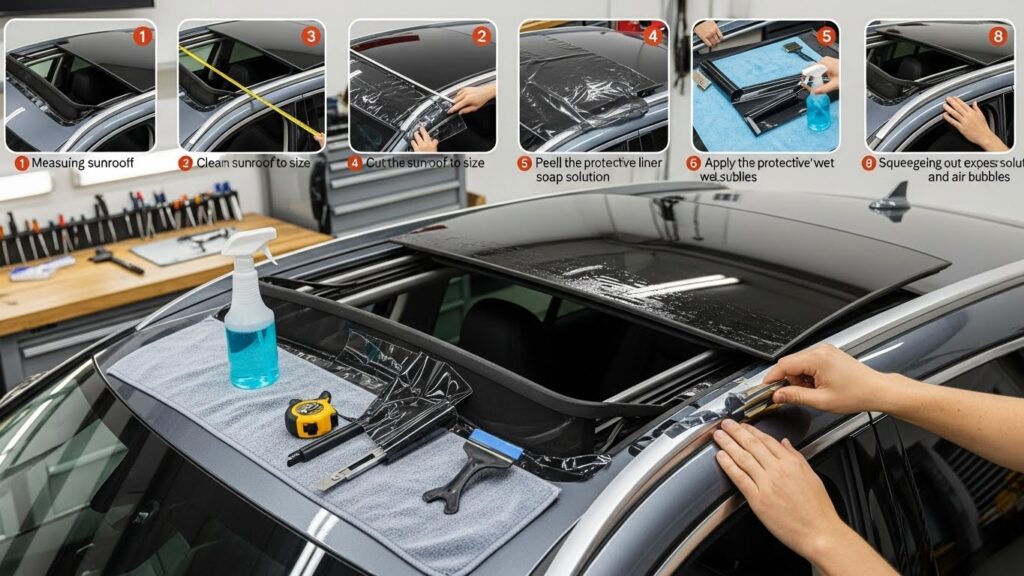
Window Tinting for a Car Sunroof refers to applying a specialized window film to the glass roof panel to control heat, reduce sunlight, and protect the interior. A sunroof lets in more direct sunlight than side windows, which makes heat buildup, UV exposure, and glare more noticeable.
Sunroof tinting uses materials like ceramic film, carbon film, heat-resistant tint, or UV protection film to manage light and temperature while keeping the cabin comfortable.
It is part of the broader ecosystem of Automotive Window Tinting, where Commercial Window Film, Residential Mirror Effect Window Film, 3M Di-Noc Film in Dubai, 3M Fasara Window Film, and 3M Safety and Security Film all share similar principles of heat rejection, optical clarity, and UV protection.
2. Why Sunroof Tinting Matters
A sunroof adds natural light and style, but without sunroof heat reduction, your cabin can warm up quickly. And when the sun is at its highest, the glass roof becomes a hotspot.
Tinting your sunroof helps with:
- Heat buildup prevention
- UV radiation barrier
- Glare reduction film benefits
- Interior comfort enhancement
- Upholstery fading prevention
- Dashboard sun damage protection
These issues matter more in warmer regions because the overhead glass absorbs solar heat, increasing AC load and fuel consumption. Tinting limits the stress on the cooling system while improving driving comfort.
3. How Sunroof Tinting Works
Sunroof tinting relies on heat-resistant tint and UV blocking layer technology. When sunlight hits the tinted glass:
- A portion of the heat is reflected using heat rejection tint.
- UV rays are filtered out using UV protection tint.
- Visible light is controlled through a specific Visible Light Transmission (VLT) level.
- The film enhances thermal insulation and prevents glare.
Some tints use multilayer optical film, ceramic particles, or nano-carbon tint to achieve high performance while keeping visibility clear.
4. Key Benefits of Sunroof Window Tinting
Tinting the sunroof offers several advantages. These benefits create natural semantic bridges to other protective films like 3M Fasara Window Film, 3M Di-Noc Film, or Commercial Window Film because they all manage light, heat, and privacy in different ways.
✔ Heat Reduction
A sunroof receives more sunlight than any other glass point on the car. A high-quality solar heat protection film reduces cabin temperature and enhances vehicle temperature control.
✔ UV Protection
Tint can block up to 99% of harmful UV rays, reducing risks related to skin exposure and preventing interior fading.
✔ Glare Reduction
A glare reduction window tint makes driving easier by cutting brightness when sunlight streams through the roof.
✔ Privacy and Comfort
Lower VLT tints increase privacy sunroof tint benefits without affecting clarity.
✔ Interior Protection
Blocking UV rays protects materials like:
- leather seats
- dashboard
- stitching
- trim
- roof liner
This reduces long-term wear.
5. Choosing the Right Sunroof Tint
Choosing the right tint involves balancing:
● VLT (Visible Light Transmission)
Low VLT means less visible light, more privacy, and better heat blocking.
High VLT means more natural light and clearer views.
● Tint Material Quality
Options include:
- ceramic sunroof film
- metallic sunroof film
- non-metallic tint film
- premium grade automotive film
Ceramic is the best for optical clarity tint, non-metallic signal safety, and high heat rejection.
● Durability
Look for scratch resistant tint film, stable color, and long lasting tint film that doesn’t fade.
● Install Quality
Precise alignment and smooth adhesion matter for:
- tint clarity and visibility
- tint adhesion quality
- roof glass treatment longevity
6. Types of Sunroof Window Films
A sunroof can use many of the same films seen in Automotive Window Tinting, but performance matters more due to the rooftop exposure.
1. Ceramic Tint
Made with ceramic particles, offering:
- superior infrared filtering
- no signal interference
- excellent solar heat blocking
- crisp optical clarity
2. Carbon Tint
A deep matte finish with:
- strong heat rejection tint
- high durability
- no purple fading
3. Metalized Tint
Reflects sunlight using micro-metal layers but may affect GPS or mobile signal due to its reflective nature.
4. Dyed Tint
Affordable but offers the least UV blocking layer and fades faster.
5. Hybrid Films
Mixes multiple technologies for balanced performance.
7. Legal and Safety Considerations
Most regions allow sunroof tinting as long as visibility remains safe. Regulations often focus on:
- side windows
- rear windows
- front windshields
But sunroofs usually enjoy more flexibility.
Still, it’s important to choose:
- a safe VLT that maintains visibility
- a film that doesn’t cause glare increase
- a product with UV protection tint certification
8. Sunroof Tinting vs. Regular Window Tinting
Sunroof tinting has unique characteristics:
| Feature | Regular Windows | Sunroof |
|---|---|---|
| Sun Exposure | moderate | extreme |
| Heat Load | medium | high |
| Film Material | flexible | heat-resistant tint recommended |
| UV Exposure | controlled | direct overhead |
| Installation Complexity | low | medium |
Sunroof glass is thicker and often tinted from the factory, which means aftermarket tint must be high performance to make a noticeable difference.
Q1: Does tinting a sunroof reduce heat?
Yes. A solar heat protection film significantly reduces heat entering through the glass.
Q2: Which tint is best for a sunroof?
A ceramic sunroof film is ideal because it provides high heat rejection, UV blocking, and optical clarity.
Q3: Can sunroof tint cause cracking?
When installed correctly with a heat-resistant tint, cracking is extremely rare. Factory glass is designed to handle expansion.
Q4: Does sunroof tint affect visibility?
A well-matched VLT level maintains clear visibility while reducing glare.
Q5: Will tinting my sunroof void warranty?
This depends on the vehicle brand. High-quality, non-invasive films usually do not affect warranties.
Final Thoughts
Tinting your car sunroof improves comfort, protects your interior, and reduces daily glare. A thoughtful choice—using premium grade automotive film, the right VLT, and professional installation—creates lasting benefits. Whether you prefer ceramic, carbon, or advanced multilayer optical film, the right tint adds value and enhances your daily driving routine.
A well-tinted sunroof offers:
- better UV protection
- improved interior comfort
- long-term durability
- more enjoyable daylight driving
- sustainable heat rejection performance
And because sunroof tinting sits at the intersection of comfort, safety, and automotive window tinting, it’s a practical upgrade for anyone living in a sunny climate.