
1. Introduction
Installing paint protection film (PPF) preserves the original factory paint, prevents chips and scratches from sun, sand, and debris, reduces repainting and touch-up costs, and improves buyer confidence — all of which contribute to a higher car resale value in climates with intense sun and dust. Use PPF coverage, documentation, and clear before/after photos in listings to show preserved showroom shine and justify a stronger asking price.
2. What is Paint Protection Film (PPF)?
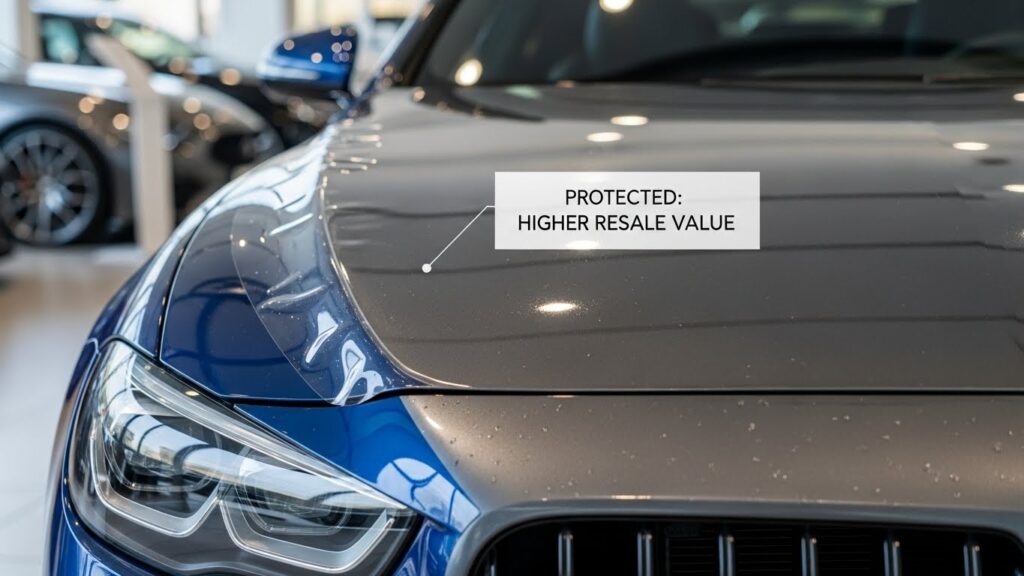
Paint protection film is a transparent, durable protective layer applied to a vehicle’s exterior. It acts as a protective shield over the paint, reducing damage from mechanical impacts and environmental wear. PPF is engineered to provide chip resistance, scratch protection, and stain resistance while preserving surface clarity and gloss.
Key attributes: protective barrier, surface protection, gloss enhancement, durability, and ease of maintenance.
3. How PPF protects your car in harsh climates
3.1 UV protection and paint longevity
Intense sun exposure accelerates paint fading and yellowing. A well-applied PPF provides UV protection, reducing color degradation and maintaining paint longevity. Cars exposed to strong sunlight for years that also have PPF typically show less paint degradation and better gloss retention, which buyers notice immediately.
3.2 Sand, stone chips, and road debris defense
Sandstorms and sharp road debris cause microchips and scratches that quickly lower perceived vehicle condition. The film’s chip resistance and sand abrasion protection shields vulnerable body panels, bumpers, and mirrors, preventing surface damage that would otherwise require paint correction or full respray.
3.3 Chemical and pollutant resistance
Environmental contaminants — bird droppings, fuel splashes, and industrial fallout — can etch and stain paint. PPF acts as a chemical barrier, offering pollutant resistance so the underlying paint remains untouched and easier to maintain.
4. Why preserved original factory paint matters to buyers
When shoppers evaluate a used car, the exterior condition signals how the vehicle was cared for. Factory paint preservation reduces doubts about accident repairs, bodywork discrepancies, or hidden damage. Cars that retain untouched paint command higher offers because:
- Repainting suggests past damage to many buyers.
- Factory coatings maintain consistent color, texture, and reflectivity.
- A flawless finish improves negotiation leverage and appraisal outcomes.
Use documentation (installation receipts, warranty papers, and patch photos) to validate paint integrity and show the protective layer that preserved the finish.
5. Appearance, maintenance, and perceived value
5.1 Easier cleaning and stain resistance
PPF’s surface chemistry often repels dirt and contaminants, making vehicles easier to clean. Reduced cleaning frequency and less need for aggressive detailing translate to lower upkeep and better long-term presentation — a selling point for buyers who want a well-maintained car without high maintenance.
5.2 Self-healing surfaces and gloss retention
Many modern films feature self-healing technology: minor surface scratches disappear with heat or sunlight, restoring surface retention and a high-gloss finish. That sustained premium appearance directly affects buyer perception and resale premiums.
6. PPF vs other exterior protection options (ceramic coating, waxing)
A clear comparison helps buyers and sellers understand value.
- Waxing / Sealants: Short-lived, low-cost, temporary gloss. Does not protect against chips or deep scratches.
- Ceramic coating: Provides hydrophobic and gloss benefits; resists minor staining but does not stop stone chips or deep abrasions.
- PPF (film): Mechanical barrier against chips and scratches, plus many films offer hydrophobic and self-healing properties. Best option where chip resistance and paint preservation are critical.
Recommendation: Use PPF where physical damage is a concern; consider a ceramic coating over PPF (or on unprotected panels) for extra hydrophobicity and gloss.
7. Coverage, types, and installation choices (what to ask your installer)
7.1 Film materials and performance differences
Not all films are the same. Look for films described with attributes like durability, clarity, self-healing, and UV protection. Ask about expected lifespan and test data for heat/UV resilience.
7.2 Coverage levels: full body, front kit, partial kits
- Full body: maximum protection and resale signal — recommended for luxury or high-value cars.
- Front kit: common for drivers who want protection for the hood, bumper, mirrors, and fenders.
- Partial kit: focuses on the most-exposed panels for cost-effectiveness.
Choose coverage based on driving conditions, resale goals, and budget.
7.3 Warranty and durability expectations
Ask for written warranty details, expected years of service, and coverage terms (stain protection, delamination, yellowing). Good installers provide quality installation, warranty transfer options, and maintenance instructions.
8. Cost vs. return: How PPF can pay for itself at resale
Consider the lifecycle value:
- Cost avoided: paint correction, localized touch-ups, full respray.
- Value gained: better appraisal, more buyer interest, shorter time on market.
- Soft benefits: perceived care which can add thousands in buyer offers for high-end vehicles.
Example: A modest PPF investment that prevents a respray or corrects visible chips may preserve several percentage points of a car’s value — often exceeding the film’s cost at sale time, especially for luxury/limited-edition cars.
Q: Does PPF increase resale value?
A: Yes. By preserving the original paint, preventing chips and visible damage, and keeping a showroom shine, PPF often improves buyer confidence and can increase resale prices.
Q: How long does PPF last?
A: Lifespan varies by film quality and climate. Expect several years of reliable protection; review installer warranties for specifics.
Q: PPF vs ceramic coating — which is better?
A: They serve different roles. PPF protects against mechanical damage; ceramic improves hydrophobicity and gloss. Combining the two is common.
Q: Will PPF yellow in strong sun?
A: Quality films designed for harsh climates include UV protection and resist yellowing; warranty details and long-term clarity testing are important.
Q: Can PPF be removed without damaging paint?
A: Yes — properly installed film is removable and can reveal the original factory paint beneath.
Conclusion — Practical checklist before sale
- Keep installation proof and warranty documents ready.
- Photograph untouched paint areas after film removal (if applicable) and before sale.
- List protective film coverage and notable attributes (UV protection, self-healing, chip resistance).
- Mention lower maintenance needs (easier cleaning, stain resistance).
- Price competitively, using preserved original factory paint as a negotiation asset.
A car with visible showroom shine, minimal chips, and proof of consistent care is more attractive and commands better offers.